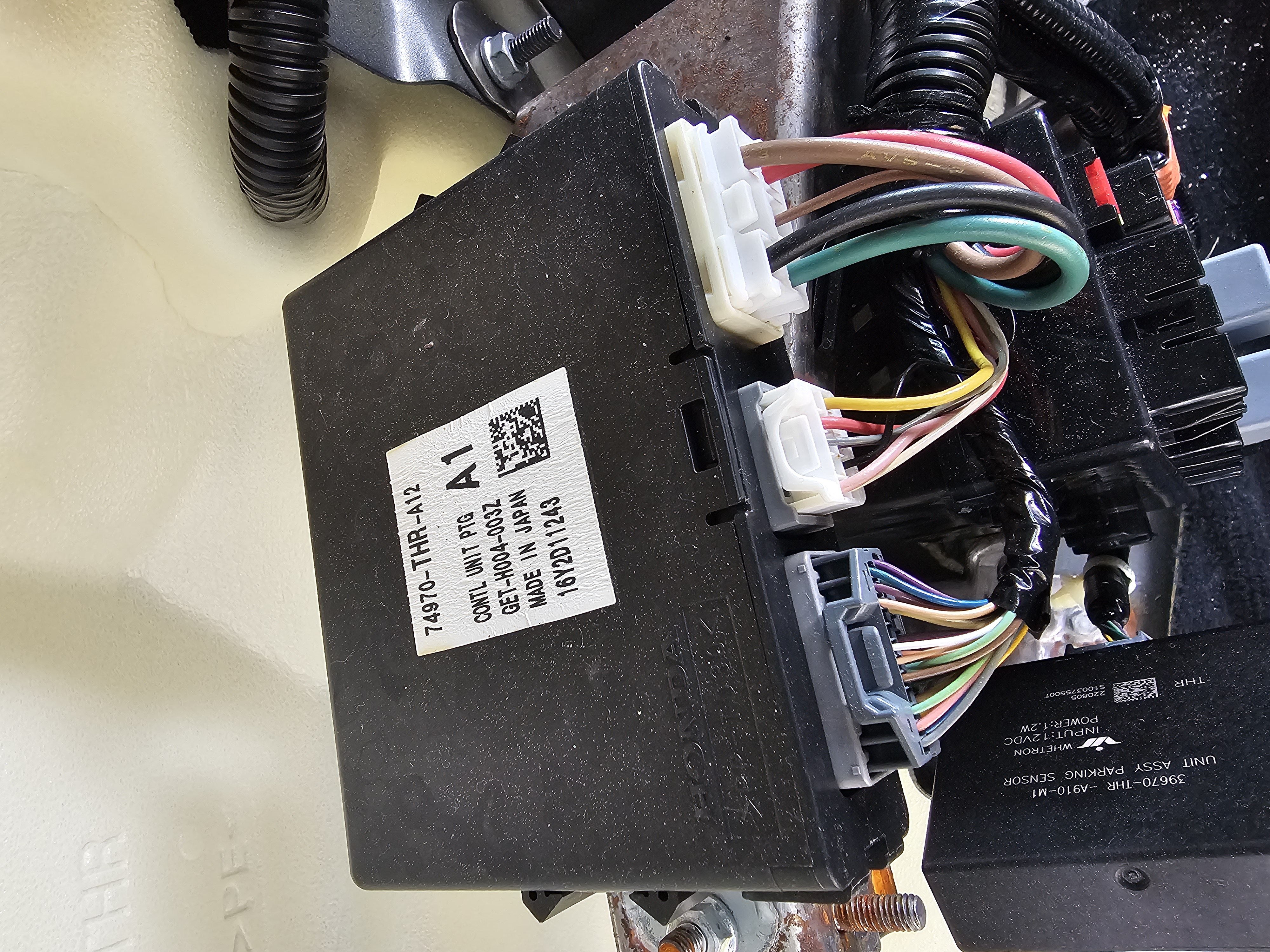
Control Unit Identification — Part #74970-THR-A12
The power tailgate control unit, made in Japan. This is the component that failed due to water damage from the body seam leak.
Photographs of water damage and corrosion found inside a 2023 Honda Odyssey — behind interior panels, not visible without disassembly.
A detailed walkthrough showing how to access the tailgate panels, what was discovered, and how easily the panels reassemble — demonstrating that no damage was caused by the inspection.
The power tailgate control unit, made in Japan. This is the component that failed due to water damage from the body seam leak.
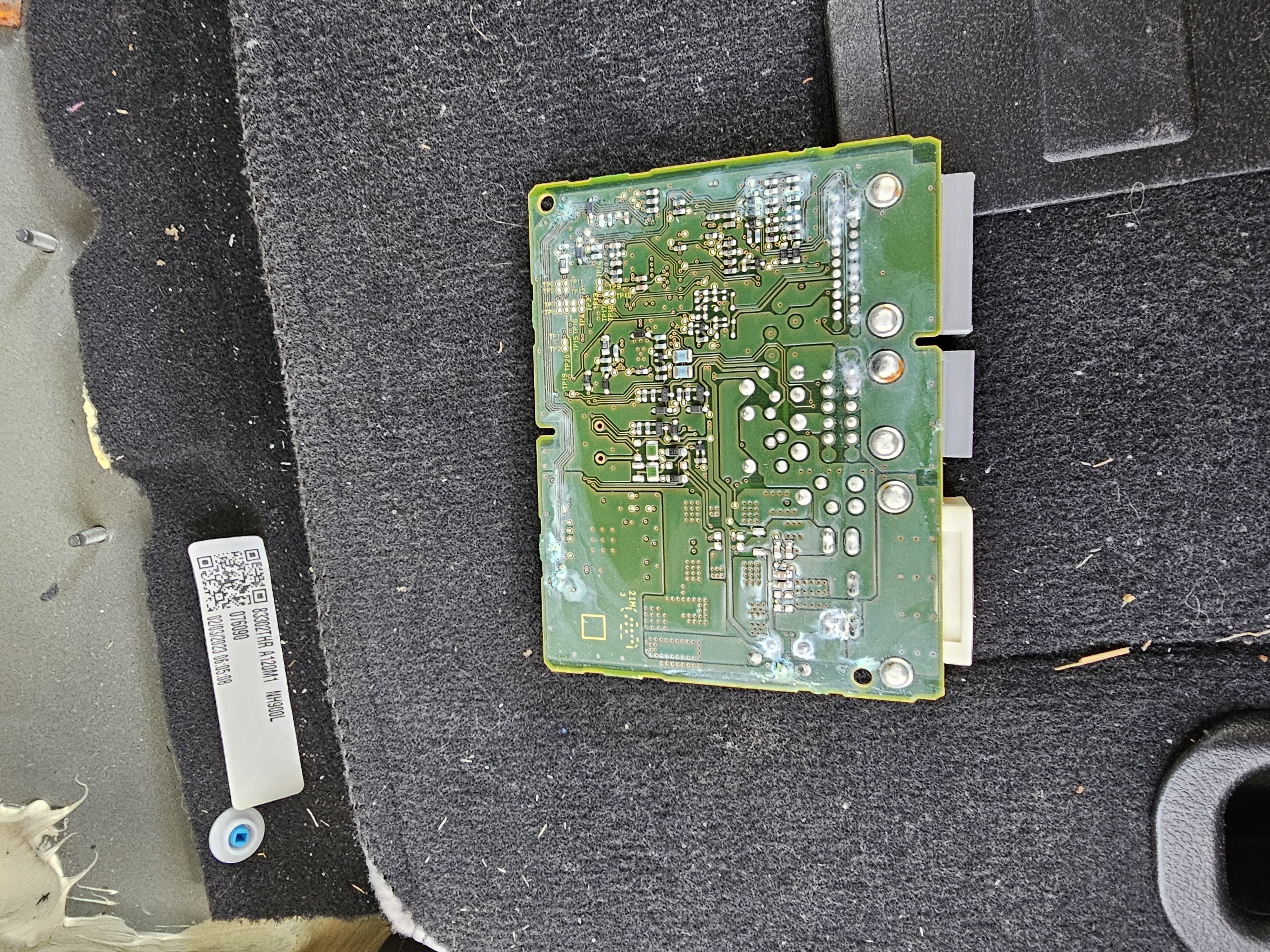
Extensive green corrosion visible across the PCB. Discoloration patterns indicate repeated water exposure over time — not a single incident.
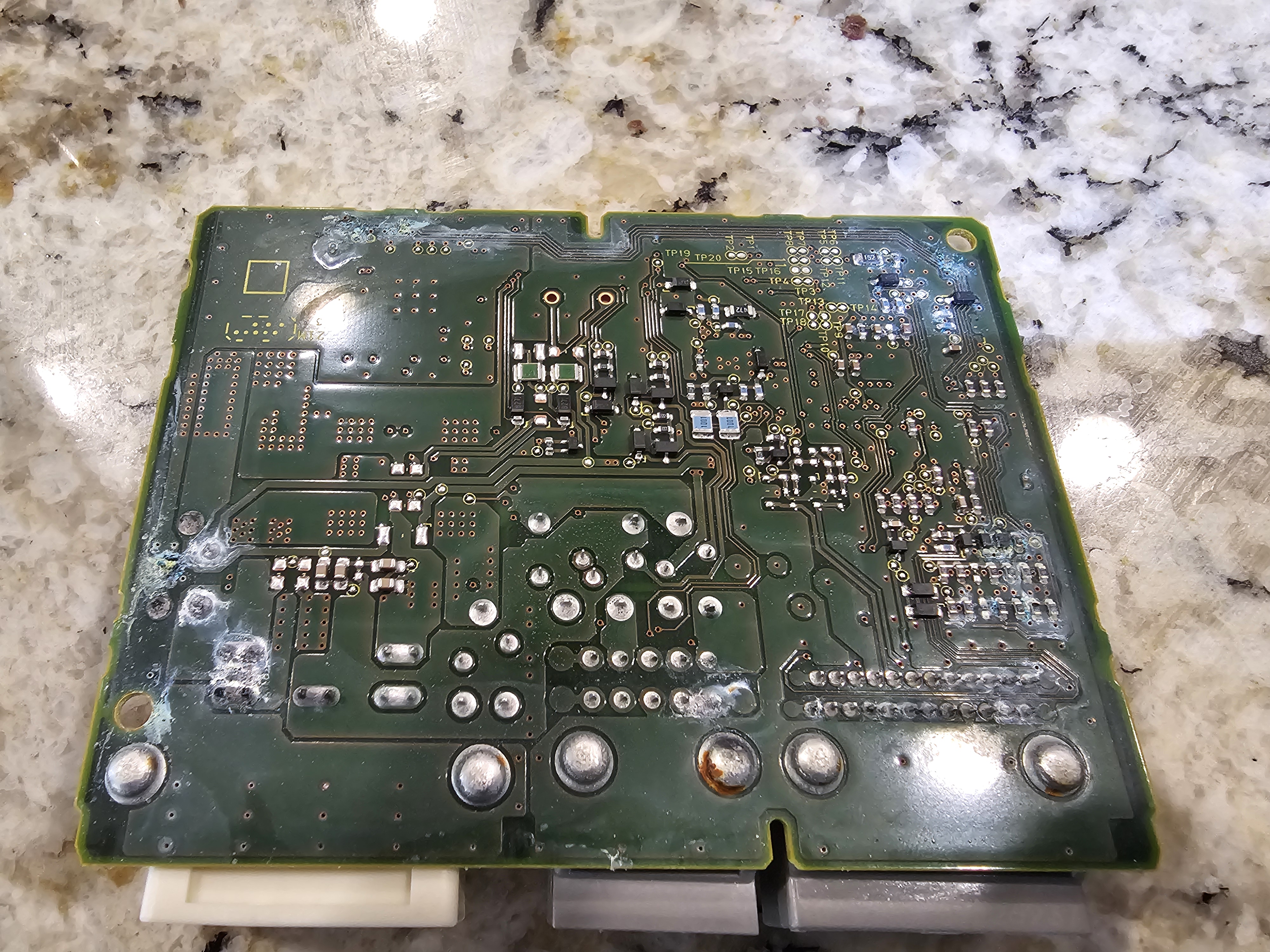
Dried water stains and corrosion patterns. The staining shows where water pooled and evaporated repeatedly, indicating a slow chronic leak — not a flooding event.
A class action lawsuit was filed for 2018–2021 Honda Odyssey models experiencing the same body seam glue failure causing water intrusion. My 2023 model exhibits identical symptoms, suggesting Honda did not fully resolve this manufacturing problem before continuing production.